


Views: 0 Author: Site Editor Publish Time: 2026-04-27 Origin: Site


Choosing between disposable vs reusable injection pens represents one of the first strategic decisions pharmaceutical companies face when developing self-injection products. This choice ripples through every subsequent decision—from manufacturing costs to supply chain complexity, from patient experience to environmental positioning. For B2B procurement specialists, brand managers, and commercial leads evaluating device options, understanding the real-world tradeoffs between these injection pen device types transforms an abstract choice into a strategic business decision.
Disposable and reusable pens represent fundamentally different design philosophies, each optimized for distinct use cases and commercial models. Before diving into cost comparisons, procurement teams need solid grounding in what actually distinguishes these categories.
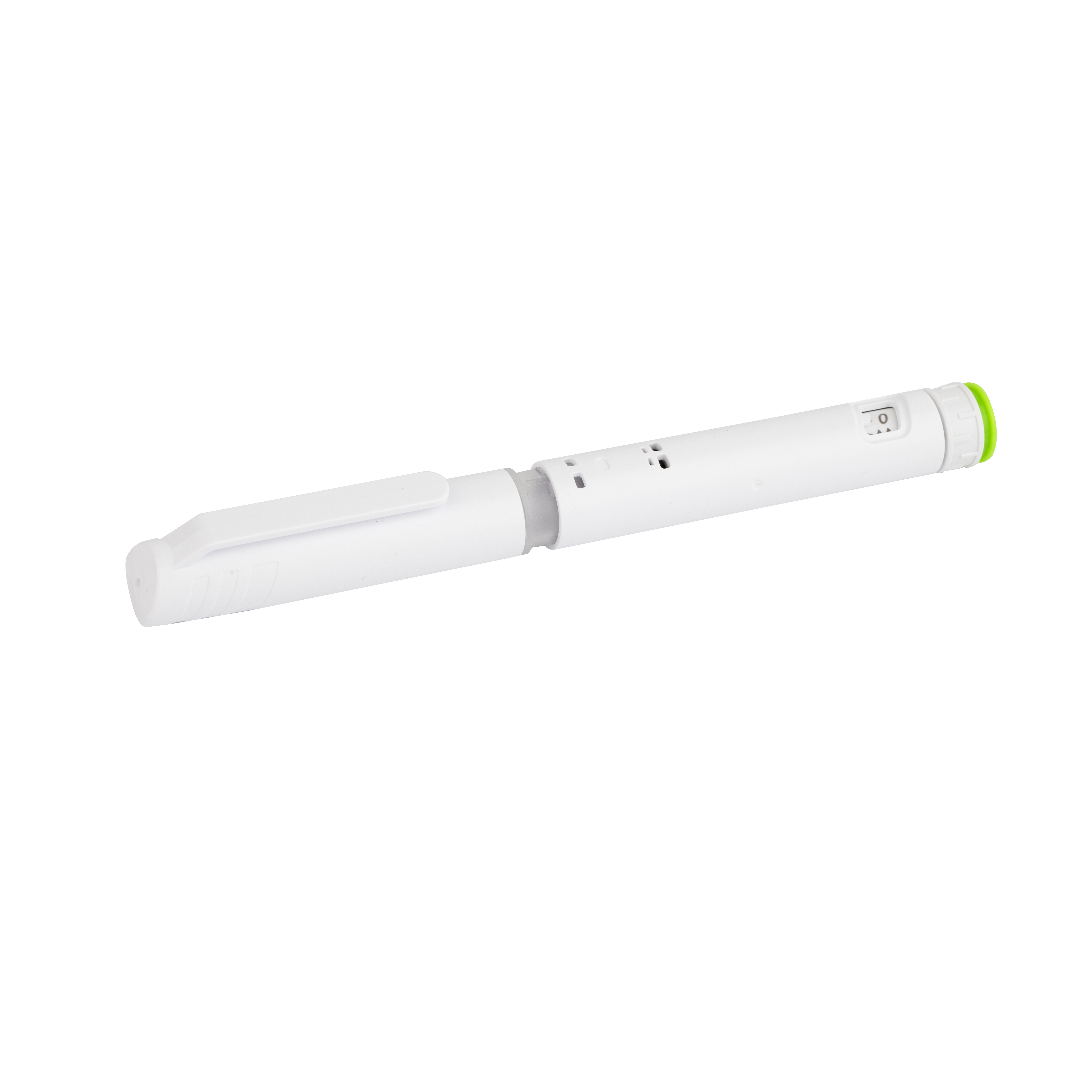
Disposable injection pens arrive pre-loaded with drug product, intended for single-patient use through a complete treatment course, and discarded after use. The entire pen—including cartridge, mechanism, and body—becomes waste. These devices optimize for manufacturing simplicity and patient convenience, trading material efficiency for reduced handling complexity.
Sunrise Medical's disposable pen offerings, including the Disposable Green Injection Pen V1, demonstrate how modern disposable devices incorporate sophisticated engineering while maintaining cost-effectiveness for high-volume applications.
Reusable pens—the Magic Pen 2.0 exemplifies this category—feature durable mechanical assemblies designed for multiple uses. Patients load prefilled cartridges containing drug product, administer doses using the same pen body over weeks or months, and eventually replace the pen when reaching replacement schedules or device lifetime limits.
This architecture requires more sophisticated mechanical design, higher initial device costs, and patient training on cartridge replacement procedures. In exchange, it offers lower per-dose economics and reduced packaging waste.
Unit price comparison rarely tells the full story. Sophisticated procurement teams analyze total cost of ownership across product lifecycles, considering manufacturing costs, supply chain factors, and business model implications.
Disposable pens concentrate material costs in each unit sold. Every pen includes complete mechanical assemblies—springs, dose dials, drive mechanisms—regardless of how many times patients use the device. For a 12-week treatment course requiring 12 weekly injections, disposable delivery means manufacturing 12 complete pen assemblies.
Reusable pens front-load manufacturing investment in durable components designed for multiple injection cycles per ISO 11608 durability requirements. Per-unit costs run higher due to enhanced durability specifications, but those costs amortize across many doses. For chronic disease treatments spanning months or years, per-dose economics strongly favor reusables.
Beyond direct manufacturing costs, business model implications create different cost exposure patterns. Disposable pens shipped with every dose simplify supply chains but multiply packaging, transportation, and storage requirements. Each shipment includes complete injection devices, amplifying logistics costs and environmental footprint.
Reusable pen programs require managing two distinct supply chains—pen devices and prefilled cartridges—each with separate inventory requirements and distribution challenges. This complexity increases operational overhead but enables more flexible inventory management and potentially longer shelf life utilization.
When evaluating injection pen manufacturers, B2B buyers encounter diverse cost structures. Competitor A offers aggressive pricing on reusable pen platforms but charges significant premiums for customization options. Competitor B provides competitive disposable pen pricing but lacks reusable pen manufacturing capabilities entirely.
Sunrise Medical's manufacturing footprint supports both device categories from the same quality systems and facilities, enabling fair internal cost comparisons and recommendations based on customer requirements rather than manufacturing limitations. This flexibility allows the commercial team to recommend optimal device types based on specific product characteristics.
B2B decisions ultimately serve patient populations. Understanding how device types translate to patient experience helps procurement teams align purchasing criteria with commercial objectives.
Disposable pens offer streamlined patient experiences—no cartridge handling, no preparation steps, reduced training requirements. Patients receive their medication, attach a needle, and inject. This simplicity supports adherence, particularly for patients new to self-injection or managing multiple medications.
Reusable pens demand more patient engagement. Loading cartridges, confirming dose settings, and proper pen storage require patient education and ongoing attention. While experienced patients often adapt well, support burden and training investments may offset per-dose cost advantages for some populations.
Disposable pens typically optimize for single-dose handling characteristics—ergonomic shapes suited to one injection, packaging designed for individual distribution. These designs cannot leverage reusable pen advantages like larger grips, reinforced mechanisms, and longer bodies that prioritize durability over convenience.
Reusable pen designs accommodate larger form factors suited to repeated handling. Enhanced grip surfaces, robust mechanism housings, and larger dose dials improve usability for patients managing chronic conditions requiring ongoing therapy. These ergonomic advantages may translate to better patient satisfaction scores and reduced administration errors.
Device category choices interact with regulatory strategies and quality system requirements in ways that impact commercial timelines and ongoing compliance burden.
Both disposable and reusable pens function as combination products when paired with pharmaceutical formulations, triggering regulatory oversight under drug-device combination product frameworks. Regulatory submission requirements and review pathways share significant overlap regardless of device category, as defined in ISO 11608 series standards.
However, lifecycle management differs meaningfully. Disposable pens integrate device and drug supply chains, creating combined recall and change management considerations. Reusable pen programs separate device lifecycle from drug supply, potentially enabling more targeted responses to quality events affecting either component.
Manufacturing quality systems must control device production regardless of category. Both device types require ISO 13485-compliant quality management. However, reusable pen programs typically carry additional traceability requirements tracking individual pen devices through multiple production batches of cartridges. This device genealogy complexity increases documentation overhead and quality assurance resource requirements.
Beyond pure economics, device category selection influences market positioning and competitive strategy in pharmaceutical markets.
Reusable pen programs often align with premium product positioning—investing in a durable device signals commitment to patient experience and differentiates from commoditized alternatives. Pharmaceutical brands leveraging reusable pen strategies can communicate environmental responsibility messaging and long-term patient support orientations.
Disposable pen programs suit value positioning strategies where low acquisition costs and streamlined distribution outweigh per-dose economics. Generic pharmaceutical products, particularly in price-sensitive markets, frequently leverage disposable delivery to minimize patient and payer barriers.
Examining competitor strategies reveals market patterns. Competitor A has invested heavily in reusable pen platforms, building brand recognition around their durable device ecosystem. Competitor B dominates disposable pen markets through cost leadership and manufacturing scale advantages.
Sunrise Medical's manufacturing capabilities span both categories, enabling customer strategies rather than forcing product-category alignment. This flexibility proves particularly valuable for pharmaceutical companies entering markets with established competitive positioning requiring differentiation.
Translating analysis into actionable decisions requires structured evaluation frameworks. Procurement teams should consider these factors when recommending device categories for internal stakeholders.
Treatment duration heavily influences optimal device category. Acute treatments spanning weeks benefit from disposable simplicity. Chronic therapies requiring months or years of ongoing dosing create stronger economic cases for reusable platforms.
Patient population characteristics also matter significantly. Elderly populations, patients with dexterity challenges, or those requiring caregiver administration may favor disposable simplicity despite higher per-dose costs. Younger, more engaged patient populations often accept reusable pen requirements and capture associated benefits.
Existing commercial infrastructure shapes viable device strategies. Companies with established distribution networks optimized for temperature-sensitive biologics may find disposable pens create incremental cold chain challenges. Organizations building distribution capabilities for new markets might architect supply chains around reusable pen programs from inception.
Rather than advocating for one approach, Sunrise Medical's commercial team helps customers evaluate specific situations and recommend strategies aligned with business objectives.
Both device categories receive equal engineering attention at Sunrise Medical. Quality systems, regulatory capabilities, and manufacturing expertise apply regardless of whether production lines produce disposable or reusable injection pen devices. This balanced capability enables recommendations based on customer needs rather than manufacturing convenience.
With weekly production capacity reaching 50,000 units, Sunrise Medical can scale production for either device category based on customer requirements and market demand patterns.
Key considerations include treatment duration (chronic therapies favor reusable), patient population characteristics (elderly or novice patients may prefer disposable simplicity), per-dose economics versus upfront device costs, supply chain complexity tolerance, environmental positioning goals, and competitive market positioning requirements.
Reusable pens typically show better per-dose economics for long-term treatments due to device cost amortization across many doses. However, total cost analysis must account for cartridge supply chain complexity, patient support burden, and quality system overhead. For short-term treatments, disposable pens often prove more economical.
Yes, Sunrise Medical manufactures both disposable and reusable injection pen devices. Some pharmaceutical partners develop programs offering both device options for different market segments or patient preferences, requiring coordination with manufacturing but achievable within Sunrise Medical's production capabilities.
Both device types face similar regulatory requirements as combination products per ISO 11608 and MDR 2017/745. Key differences include device lifecycle documentation requirements (more extensive for reusable) and supply chain change management complexity. Sunrise Medical's regulatory team supports both pathways with appropriate documentation strategies.
Research suggests adherence varies by patient population and treatment context. Disposable pens often show better adherence in acute or temporary treatment settings due to simplicity. Reusable pens may support better adherence for chronic conditions where device familiarity develops over time, though training quality significantly influences outcomes for both types.


