


Views: 0 Author: Site Editor Publish Time: 2026-04-28 Origin: Site


Finding the right injection pen manufacturer for your medical device program can make or break your product launch. The stakes run high—regulatory submissions depend on manufacturing quality, patient safety hinges on device reliability, and commercial success requires supply chain confidence. Yet B2B procurement teams, R&D directors, and commercial leads often lack frameworks for evaluating OEM injection pen suppliers beyond surface-level credentials. This guide provides systematic evaluation criteria that experienced pharmaceutical buyers use to identify manufacturing partners capable of supporting long-term commercial success.
The injection pen device you select becomes a long-term strategic asset—or liability. Unlike commodity purchases, manufacturing partnerships in the medical device space create deep dependencies that compound over time. Regulatory filings embed manufacturer capabilities into product approvals. Patient populations develop familiarity with specific device characteristics. Supply chains crystallize around production capabilities. Exit strategies, when necessary, require substantial investment and regulatory coordination.
Consider what happens when manufacturer evaluation falls short. Quality escapes reach patients before correction. Capacity constraints delay market entry, providing competitive openings. Communication failures create misunderstanding cascades that waste engineering resources. Regulatory findings attributable to manufacturing deficiencies trigger remediation requirements and submission delays measured in quarters.
Sunrise Medical has observed cases where pharmaceutical companies approached injection pen manufacturer selection casually, prioritizing unit price over capability assessment, only to face challenges that overshadowed initial savings. Learning from these patterns helps B2B buyers apply appropriate rigor to their evaluation processes.
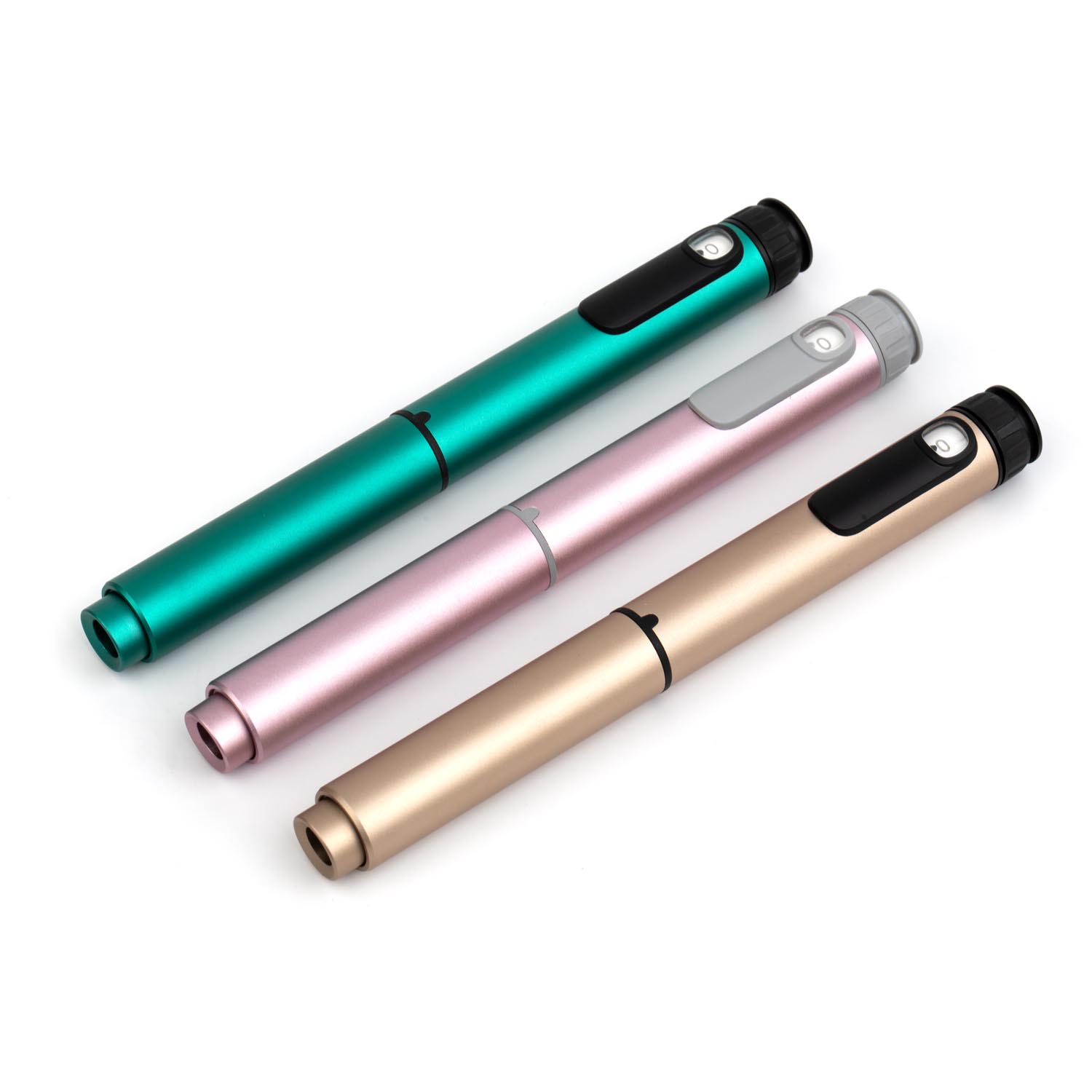
Manufacturer credentials form the baseline for evaluation—but credentials require verification, not assumption. ISO 13485 certification, CE marking, and FDA registration statements deserve confirmation through independent verification.
ISO 13485 certification demonstrates quality management system implementation, but certification scope varies. Examine whether the certificate covers the specific manufacturing activities your program requires. Sunrise Medical's ISO 13485 certificate explicitly covers injection pen design, development, and manufacturing—some competitors hold certification covering only assembly while outsourcing critical manufacturing steps.
Request evidence of recent surveillance audit findings and corrective action implementation. Mature quality systems demonstrate continuous improvement through audit response. Ask about the certifying body—registrars with strong reputations in medical device sectors provide more reliable certification than generic certification bodies.
FDA Drug Master File (DMF) registration, achieved by Sunrise Medical in 2017, provides pharmaceutical partners with referenceable manufacturing documentation. However, DMF existence doesn't guarantee manufacturing suitability. Review DMF content to confirm your specific device types and manufacturing locations are covered.
CE marking under MDR 2017/745 requires Notified Body review—not self-declaration. Request the Notified Body number and verify current certificate status through EU database access. Competitor manufacturers sometimes claim CE compliance based on outdated MDD certificates not yet transitioned to MDR requirements, creating market access risks for pharmaceutical partners.
Credentials establish eligibility; capabilities determine fit. Systematic capability assessment examines manufacturing infrastructure, process controls, and capacity availability aligned with your specific requirements.
Injection pen assembly requires controlled environments minimizing contamination risks. Evaluate cleanroom classification and monitoring programs. Sunrise Medical operates ISO Class 7 cleanroom facilities with continuous environmental monitoring, but B2B buyers should verify this directly rather than accepting marketing statements.
Beyond assembly, examine component manufacturing capabilities. Manufacturers outsourcing injection molding or spring production introduce supply chain complexity and quality control challenges. Sunrise Medical maintains in-house injection molding capabilities supporting critical functional components, providing tighter control over dimensional specifications and material selection per ISO 11608 tolerance requirements.
Ask for process capability data on critical parameters. Cpk values exceeding 1.33 demonstrate robust process control for dimensions affecting device safety and performance. Sunrise Medical tracks Cpk metrics across injection molding, assembly, and testing operations, with target values exceeding 1.33 for critical dimensions per ISO 11608 specifications.
Examine inspection and testing approaches. 100% functional testing provides stronger quality assurance than sampling-based approaches for injection pen devices where individual device performance affects patient safety. Request documentation of testing protocols, acceptance criteria, and defect investigation procedures.
Capacity evaluation extends beyond available production lines to encompass workforce availability, equipment maintenance schedules, and component inventory programs. Sunrise Medical publishes capacity ranges supporting clinical trial quantities through millions of units annually—with weekly production capacity reaching 50,000 units—B2B buyers should confirm capacity availability for specific timelines.
Consider buffer capacity for demand fluctuations. Pharmaceutical market dynamics often create demand variability requiring manufacturing flexibility. Manufacturers operating at full capacity during evaluation may struggle to accommodate volume increases that typically accompany successful commercial launches.
Beyond standard product offerings, evaluate manufacturer ability to support customization and custom development. Even platform-based approaches require adaptation work addressing specific formulation requirements, brand positioning, and regulatory considerations.
Assess engineering team capabilities through project portfolio review and technical discussion. Sunrise Medical maintains dedicated engineering resources covering mechanical design, materials engineering, and process development. For custom injection pen development, ask about similar projects, timeline expectations, and development phase gates.
Prototyping capabilities accelerate development cycles. Manufacturers offering rapid prototyping services—3D printing, quick-turn injection molding, assembly prototypes—enable faster iteration during design development. Request typical prototype turnaround times and associated costs.
Platform-based approaches reduce development cost and timeline by adapting proven designs. Evaluate platform depth—how extensively can base designs accommodate customization? Sunrise Medical's platform portfolio spans multiple device architectures supporting different dose ranges, injection volumes, and patient population requirements.
Be cautious of manufacturers offering extensive customization promises that conflict with their standard product economics. Competitor A suggests customization capabilities but implements changes through costly custom tooling with lengthy lead times. Sunrise Medical structures platform adaptations to minimize non-recurring engineering while enabling meaningful differentiation.
Medical device regulatory affairs capabilities directly impact submission timelines and approval probabilities. Evaluate manufacturer regulatory competencies during supplier selection.
Combination product submissions require comprehensive device technical files. Assess manufacturer ability to compile design history files, device master records, and risk management documentation per ISO 11608 and ISO 14971 requirements. Sunrise Medical maintains these records as living documents throughout product lifecycles, enabling efficient regulatory response.
Request samples of documentation deliverables. Technical file organization, traceability matrices, and design verification report quality indicate regulatory maturity. Manufacturers with established regulatory practices produce documentation that facilitates efficient authority review.
Manufacturers experienced with FDA, EMA, and other major regulatory authority interactions provide valuable submission support. Sunrise Medical's regulatory team has supported submissions across multiple markets, developing familiarity with authority expectations and effective response strategies.
Commercial structure shapes partnership dynamics and long-term relationship viability. Evaluate commercial terms holistically rather than focusing exclusively on unit pricing.
Request comprehensive cost breakdowns distinguishing unit manufacturing costs, tooling amortization, validation costs, and ongoing quality costs. Sunrise Medical provides transparent cost structures enabling B2B buyers to conduct total cost analyses comparing across manufacturer options.
Consider quality-related costs in total analysis. Manufacturers with robust quality systems may command higher base prices while reducing hidden costs from deviations, complaints, and potential recalls. The lowest unit price rarely minimizes total cost of ownership.
Evaluate partnership expectations and relationship structures. Some manufacturers treat OEM relationships as transactional—producing specifications provided by customers without contributing strategic value. Sunrise Medical positions partnerships as collaborative relationships where manufacturer expertise informs customer decision-making.
Discuss exclusivity provisions, IP ownership, and competitive restrictions. Ensure commercial terms align with your business model and future flexibility requirements. Sunrise Medical accommodates various exclusivity structures based on customer needs while maintaining transparent policies regarding capacity allocation and customer relationships.
Manufacturing partnerships succeed or fail on communication quality. Evaluate responsiveness patterns and communication preferences during the evaluation process itself—these behaviors often persist into partnership operation.
During evaluation, assess how easily you access technical experts versus being filtered through sales representatives. Sunrise Medical provides direct engineering access for technical discussions, recognizing that manufacturing partnerships require ongoing technical dialogue beyond commercial transactions.
Request references from existing customers. Sunrise Medical connects prospective partners with reference customers willing to share partnership experiences. These conversations reveal operational realities that marketing materials cannot convey.
Manufacturing partnerships benefit from manageable geographic and cultural distances. Sunrise Medical's location in Hangzhou provides access to deep manufacturing expertise while maintaining communication practices accommodating Western business hours and cultural expectations. Some manufacturers in more remote locations create collaboration friction through time zone misalignment and cultural misunderstanding.
Systematic evaluation produces decision frameworks, but final selection requires judgment balancing multiple factors. Apply weighting appropriate to your specific situation—quality emphasis for high-risk applications, cost priority for competitive market positioning, timeline pressure for accelerated launches.
Sunrise Medical welcomes comprehensive evaluation processes, including facility audits, technical discussions, and reference conversations. The commercial team provides evaluation support helping prospective partners access information needed for informed decisions. Learn more about Sunrise Medical's capabilities, certifications, and product offerings at the official Sunrise Medical website.
Non-negotiable certifications include ISO 13485 (medical device quality management) and relevant market registrations (FDA DMF for US market, CE marking for European market). Beyond certificates, verify current status through independent database checks and audit the manufacturer's quality system to confirm operational effectiveness.
Capacity evaluation includes available production lines and equipment, workforce availability, component supplier relationships, and buffer capacity for demand fluctuations. Request capacity information specific to your production timelines rather than aggregate facility capacity claims. Consider how capacity scales if your product succeeds beyond initial projections.
Essential customization capabilities include dose range modification, cosmetic changes (colors, branding, surface finishes), and functional adjustments meeting ISO 11608 specifications. Advanced capabilities might include custom mechanism design, unique housing geometries, and integration with companion technologies. Evaluate customization flexibility against your specific requirements.
Location affects logistics costs, communication efficiency, and supply chain resilience. While China-based manufacturers like Sunrise Medical offer competitive manufacturing economics and strong technical expertise, evaluate specific supplier capabilities rather than making location-based assumptions. Verify that manufacturing location aligns with your regulatory and supply chain requirements.
Key audit questions include: walk me through your quality system structure; show me how you handle non-conforming product; describe your incoming inspection process; what are your critical process parameters and how do you monitor them; how do you manage supplier quality; describe your corrective action process; show me documentation from recent regulatory audits.


